
On 15th MAY 2025, Anna Schmid and I were invited to co-host a participatory workshop, “Creating Abortion Hope” hosted by Ruth Fletcher at Queen Mary University of London. In attendance we had various academics, abortion advocates, abortion providers, and artists eager to talk about the current provision in Ireland, north and south. Over the weekend, we were discussing abortion pathways in Ireland, the various trajectories that could be expanded and perspectives within the law that could be shifted, in order to extend abortion access to more people in Ireland.
In our workshop introduction we covered what Abortion & Creative Practices looked like in Ireland throughout the Repeal and decriminalisation campaigns in the South and North, then we facilitated the group through a Zine making activity to unlock some ideas around the current pathways. We then all made some lino prints on linen strips, so that we can eventually weave interlocking stories of care and need.
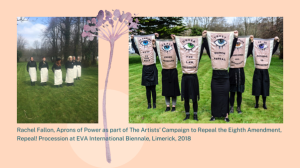
Fig.1: Image from Workshop Slides showing examples of abortion and creative practice from Ireland.
During the previous day, contributors had shared thoughts about workarounds within Ireland’s abortion laws, with suggestions shared from all by the end, that using messiness and vagueness might extend access if applied creatively. The continuing discussions of the first day reflected also on how the atmosphere in which Ireland’s abortion policy and law was rushed through, led to inadequate decision making and perhaps more conservatism than the civil society expected. Many of us wondered if the swift legal process was where paternalism crept in, almost a feeling of, “the adults will take over now’ from the Dáil and also where conservative policy makers tightened the law more than it legally needed to be. The State often requires black and white answers whereas abortion is based in the human body, which often has altogether different plans and reactions.
As someone who answers calls daily to abortion seekers there is already the misapprehension that the work of Repeal is ‘already done’ across the island, despite the fact that almost 400 people a year still have to travel to England to access legal abortion care after 12 weeks in the 26 counties and no telemedicine or information campaign on the services, up to 24 weeks in the 6 counties.
The concept of using creative methods is multifold; creative methods are now more fully understood by other fields to be generative rather than just illustrative of data, the embodied nature of making and doing engenders dialogical and reciprocal interaction, it is also a tool to bridge gaps between disciplines and in this case, an alternative way to pose questions on what an ideal abortion service would look like.
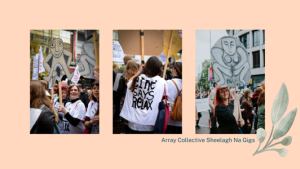
Fig. 2: Image from workshop slides showing creative protest work on abortion by Array Collective
I introduced briefly, the concepts we used for the Repro Cit project, in particular, Ruth Fletcher’s Cheeky Witnessing and its three dynamics of observation; it is messy and irreverent, it generates novel subject-figures, such as migrant cleaners, abortion seekers and feminist priests, it also utilises humorous objects, totems and characters to subvert tragedy into provocation and potential for resistance. We also discussed affective witnessing, which is both embodied and social, foregrounding emotion, affect and the relationality between bodies. In doing so it engages with protests, while also capturing events to “be witnessed in other times and places”, extending their power beyond that which occurred on the day.
An unexpected live illustration of such frustrations began with physical barriers to the workshop due to building on campus. This required the group to find alternative and sometimes longwinded ways around, including asking bemused builders for assistance. Consequently everyone was late, such a great metaphor for our morning’s topic! I had already included a time buffer (as Irish time has been known to be a bit more fluid), so the session was only a few minutes behind the schedule in the end, due to its built-in accessibility.
All participants seemed intrigued and cheerful at the beginning of the workshop, and despite me packing in lots of unfamiliar examples and information, the group of medics, advocates and scholars were engaged when presented with the artistic examples in the presentation, which called to mind some of the original sessions of the Northern/Irish Feminist Judgments Project.
Our whole group became emotional during the music video, “This is my body” with a lot of silence after, and many wiping away tears of emotional relief when it ended. It’s a heady example but powerful enough to illustrate the ignition of feeling through art and music that is possible when done well – even in a room of people used to the subject.
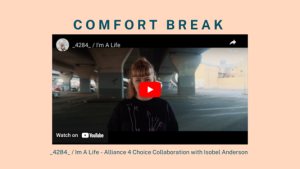
Fig. 3: Image from workshop slides showing Music Video work from Alliance for Choice and Isobel Anderson.
After several more examples, it was almost moot to remind the room that creative projects and actions introduce something into the mix that policy papers often cannot; the emotional draw that intrigues people enough to become invested in the story and the topic. People were quieter than they had been after that, which may have illustrated people’s need for time to process the emotional material, but it was also successful in allowing people to think about the implication of the laws before they were asked to use their imaginations.
At this stage Anna and I led them through a fast-paced Zine creation, with a prompt for each page and 1 minute per prompt. Each prompt as directed to the group is detailed below:
- Draw a selfie, write your name & organisation
- What is the best thing about abortion in Ireland?
- What is the most ingenious workaround on abortion you learned yesterday?
- What is the best trick you taught your pet / child / student?
- How do abortion seekers describe positive abortion experiences?
- How do providers describe positive abortion experiences?
- What is your funniest fail?
- What do you want to wave a magic wand and make happen?
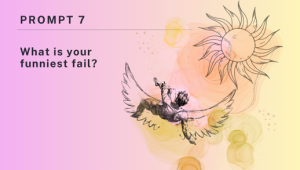
Fig. 4: Image from workshop slides showing Prompt 7 in the Zine element
The first zine question seemed helpful in bringing participants to a creative mindset, which encouraged them to create without the emotional heaviness still present from the video. It worked to bring people back into the cheerful hope of the room, while keeping the emotional weight of the topic. During the first few questions people engaged in a lot of laughter and expressed feeling rushed, during later questions they seemed to be thinking more about the questions before drawing and had quickly become familiar with the process. The room seemed to get quieter towards the final prompts, some seemed slightly uncomfortable towards the end, where some of the questions may have been more difficult to answer, e.g., the ‘funniest fail’ question, some were thinking almost the whole minute and one drew a question mark on the page, perhaps unused to the lateral way of drawing out information and thinking.
When it came to the group sharing of the zines, overall there was lots of laughter and agreement, and it generated a lively discussion. Most people highlighted the many positives for the ‘best thing about abortion in Ireland’ prompt. We heard, “it’s happening”, “free safe legal”, “freedom”, “we can speak about it”, and “choice”. We talked about various workarounds such as trying to ‘stop the clock’, framing abortion as a process not a one-off event, we even recruited potential minibus drivers to ship thwarted abortion seekers up north for treatment, and even imagined addressing some of the issues that arise due to insurance needs rather than the regulations.
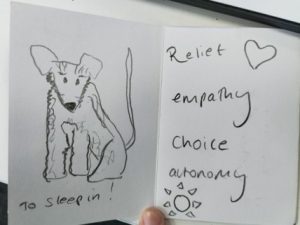
Fig. 5: Image from Zine making element
On teaching pets or kids tricks we learned a range of methods such as, teaching their child how to dress themselves, a cat drinking out of the tap, teaching babies how to blow raspberries, or teaching a dog to catch a ball, all of which illustrated both direct and habitual passing on of knowledge and skills. Abortion seekers were recorded as describing positive abortion experiences as being supported, as being at home, being a relief, and even “all smiley faces” which we interpreted as them being happy with the process.
We shared positive provider experiences as having the ability to provide and being in-sync with the abortion seeker whilst also addressing their needs. We laughed at various funny personal fails, e.g., one participant showing up to do surgery in fluffy bedroom slippers! The ‘personal fails’ question illuminated how there is so much to be learned in hindsight from our mistakes (just like the morning when we had to find other ways in), therefore it is useful to think about how with every win, there are often many failures that came before that to learn from. Finally we all wished for a magic wand to crush the patriarchy (solving many separate issues), a world with no borders or visas, an open door around secrets or stigmatised issues, and full abortion decriminalisation. Obviously.
Lino-print making:
After the Zines exercise we felt everyone was now ready for some print making. We explained how and where the previous workshops had happened and invited our participants to look at the tiles made in those workshops and if there was any crossover. Anna and I had also carved some tiles the evening before, after reflecting on the issues at the previous days sessions and so participants started by looking through the pre-made lino tiles.
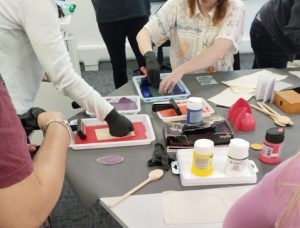
Fig. 6: Participants inking their tiles for printing
Most participants went for the pre-made clock with bendy time and the process tiles we made the previous night, many also liked a vulva shaped tile with the word “heal” on it or the ‘care’ illustration one. Our workshop split up into two groups, one who began printing immediately and one began carving, which is meditative work that encouraged conversations and perhaps a little more faith in their own creative skills! Of the participants that made a range of lino-cuts themselves: one carved brain flowers, one was about no travel (with a crossed-out plane), one created a utopia without borders, and another researcher made cute little stick-figures holding hands with the word ‘care’.
The attending providers mostly went for the ready-made lino-cuts, worked very neatly and efficiently. Everyone was helping each other, for example sharing tricks on how to carve or print. Some participants found the instructions difficult and we had to clean up some extra mess which was a nice metaphor for what we had been talking about the previous day (i.e., medication sometimes fails, and now we need to find a way to solve it). Everyone interpreted the process a little differently and started at various points, some participants used different tiles and colours; some stuck to one colour, others were insistent on using different colours (i.e., went and washed tiles), but ultimately they all ended up with the same result, an image printed on linen, to wear, share and weave. Some people came to their own conclusions about how the workshop process reflected the access processes we had been talking about, specifically the messiness of the body’s processes and also how coming together across differing skills and expertise catalyses alternative solutions. Others talked about the red ink representing bleeding and mentioned that when you carve the lino tiles you have to really commit to using the ink before you know if your design works.
We had some of our provider participants chatting about protocols and positive provision experiences while printing, in an organic and pragmatically useful way. The protocol discussion included the 12+0 rule in current Irish provision, considering where it came from, as well as the arbitrariness of distinguishing incomplete and failed abortions. A couple of the legal academics talked about the meaning of time, in particular, thinking about multiple feminist times during carving, and how some things need to be able to take as much time as they need, but also if necessary, be as fast as possible. Beyond the metaphors, others expressed being impressed by the artistic abilities in the room, both encouraging and supporting each other.
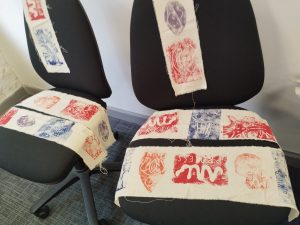
Fig. 7: Image showing printed panels at the end of the workshop
One of the many reasons methods such as these are useful, is where the process of making and creating can aid discussion, help resolve problems and make connections – ultimately creative labor in these workshops can function as an extension, translation, or reconfiguration of the abortion-related problems we wish to resolve.
By the end of the process as people were finishing up and posing wearing their creations, the group were sharing the illustrative lessons for abortion from the workshop. The highlight for many was how even those running out of time to finish their prints, described the unfinished process as symbolic for abortion processes.
The noise that often surrounds abortion, such as the commotion made by anti-choice actors in the North last week can cloud the material needs of the people using the services or being represented. Even as advocates, researchers and providers, we often need to step beyond that haziness and instead step into a space where we grapple with the real-world barriers surrounding their experiences of care. Creative methods in this instance helped us think about the barriers of time limits, knowledge sharing, skills gaps, glacial legislative oversight and the messiness of body-related processes. It then aids creative thinking by opening participants to their own artistic skills and imagination, crucial for problem solving.
Emma Campbell and Anna Schmid, Ulster University, September 2026
Anna Schmid is a PhD student in the School of Applied Social and Policy Sciences, Ulster University, who is researching abortion accompaniment on the island of Ireland
Emma Campbell is an artist & activist based in Belfast and a lecturer in photography at Ulster University. She is a member of Array Collective, winners of the 2021 Turner Prize, and Co-Convenor of Alliance for Choice.
Discover more from Doing Feminist Legal Work
Subscribe to get the latest posts sent to your email.