
 It started with a phone call at dinnertime out of the blue, two weeks before Christmas. It was the Chairman of An Taisce asking me if I would put myself forward as An Taisce’s nominee for the Seanad. After years of asking, An Taisce had finally been approved as a nominating body and added to the 34 other organisations on the register for the Cultural and Educational panel. And according to him, after all the work put in to getting approval, they couldn’t get anyone to go forward.
That did seem a pity after such effort and I knew, having been President of An Taisce from 2004 to 2009, how important every bit of public recognition was for that organisation. I feel that it is exceedingly important to protect and conserve Ireland’s natural and built environment. Our waterways, soils and habitats must not be compromised by unsustainable development – particularly in a world being rapidly affected by Climate Change, but that is not at all the same as objecting to everything. So I did agree and sent in to An Taisce some information about how my knowledge and experience eminently qualified me to be on this panel.
It turned out that the Chairman had been somewhat economical with the truth – there were five others going forward too and there had to be a vote among the An Taisce Council and Board members. But I was much the best qualified, as well as being the only woman, so I was selected as the official nominee. Game on.
The electorate for the 43 members of Seanad Eireann from the five vocation panels is tiny. These senators are elected by current TD’s (174), the outgoing senators (60) and all the City and County Councillors (949). That’s it – the entire electorate for these 41 seats is 1183. They each have a vote on all five panels. I needed to get in touch with each and every one and ask them for a number one vote. The election was a postal one which took place the last week in January. County Council meetings take place the first Monday of the month – but not in January- too soon after Christmas, so there was no opportunity to meet them in county groups and address them in person.
With the help of the Chairman of An Taisce, a website was drawn up for me, where I could showcase myself. Derek Mooney, with whom I do radio programmes, recorded a video of me on a mobile phone setting out my stall, and with input from Karl in An Taisce, the website was assembled. I needed a flyer with all my information on it, so that I could post it to each and every voter so that they would know of my existence. A personal friend gave of her time willingly to prepare this, and An Taisce paid for the printing and postage. The printers were supplied with the addresses of the voters which are available on the county councils’ websites, and it was duly sent out.
But that was only the start of getting people to vote for me. The Cultural and Educational panel returns 5 senators (as compared to say the Agricultural or Labour panels which each return eleven candidates), so the quota of votes needed to get elected was going to be 191 for my panel as opposed to 96 on the Agricultural panel. There were 21 candidates on the ballot paper. Five of these were on the Inside panel, each nominated by four Oireachtas members and 17 were on the Outside Panel nominated by one of the nominating bodies. At least two of the final five elected senators had to come from each Panel – regardless of how many votes they actually got.
Of the 21 candidates on the ballot paper, six were members of Fianna Fail, five were Fine Gael members, and two were associated with Sinn Féin. A further two were sitting Independent County Councillors. I was one of just six out of twenty-one actual non-political people on the ballot sheet, who were qualified people nominated by bodies to represent particular educational and cultural interests. Political parties vote for the nominees from their own parties rather than on the issues, so I could hope for no number ones from Fianna Fail, Fine Gael or Sinn Féin voters. But there were no Labour, Social Democrat, Green or People before Profit candidates on the list. Surely, they would vote for me at least. I was going forward with an environmental agenda focussing on our diminishing biodiversity, the impact of climate change and the need to prepare for and develop resilience to the impacts of human- caused climate change in the next few years. These values aligned very well with those political parties. Everyone doing a little is all very well, but large government measures really do need to be put in place, and I very much wanted to be part of an Oireachtas that would do this.
I got some eye-opener on how voting actually worked. The Green party promised me no number one votes. They wanted their only nominee – on the Agricultural panel – to be elected and had done a deal with one of the other political parties. The green electors would vote number one for that party’s candidates on the other four panels (including mine) in return for number ones for him on the Agricultural panel. It worked too – he got 107 votes in the first count – 11 over the quota and was duly declared elected.
Another political party with candidates on the other four panels – but not on mine- would only give me their number one if I could ensure votes for them. I was to ask those whom I knew were giving me a no 1 on my panel, to give their number 1’s on the other panels to that political party. But how was I to know who was actually going to give me a no 1 vote? ‘I will give you a high preference’ could mean anything – but it certainly didn’t mean a No 1.
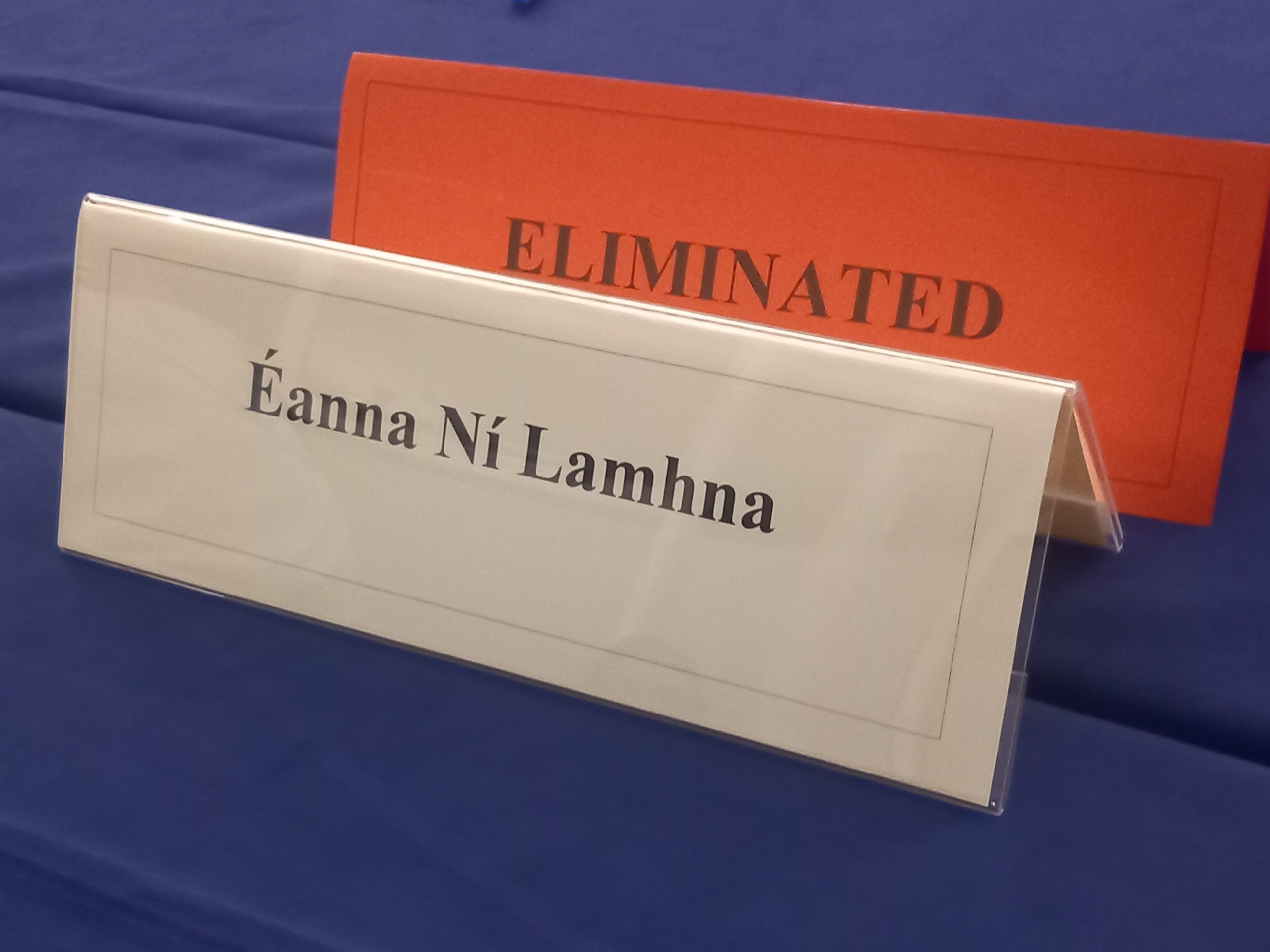
Catherine Murphy of the Social Democrats rang me and offered me all 41 votes belonging to the Soc Dems TD’s and County Councillors which is why, after the first count I ended up with a respectable 49 first preferences and 10th out of 21. Thank you, Social Democrats. As the lowest candidate got eliminated in each subsequent round I did get transfers – 23 of them – and ended up with 72 votes by the end of round 13, still 10th. Alas there were only 5 seats (not like Agriculture and Labour which each had 11 seats) so I was eliminated.
Those elected were: a member of Sinn Fein who had not succeeded in the Dail Election last November: a similarly not elected member of Fine Gael – both of whom were on the Inside Panel and nominated by their former Dail Colleagues. Another was a sitting FG senator who retained the seat while another was a Fine Gael County Councillor. The other seat went to an Independent County Councillor. None of the non-political independent candidates came near – in fact I was the last one of those to be eliminated at the end of the 13th count. So much for An Taisce’s hard work nominating someone like myself with the qualifications and expertise to represent their interests and putting in the work and the wherewithal to support my campaign. They might have had more success if they had just nominated a career politician!
And indeed, the Taoiseach went on to nominate two other Fianna Fail candidates from the list to the Seanad, when he selected the Taoiseach’s nominees on Friday last. Neither of these people had succeeded in getting elected in the Dail election in November, nor in the Seanad election, but are now members of the Seanad all the same. Democracy my eye!
Still, I am very glad I did it, that I stood up and was counted. I got a great insight into why Enda Kenny held a referendum on whether or not the Seanad should be abolished. It was originally founded so that talented, bright, influential people from the areas the five panels represent, would have an impact on how this country is governed. But the reality is that Nominating Bodies are incentivised to nominate career politicians rather than experienced experts. Senators can bring forward evidence based Private Members Bills which can go on to become effective law and the better of our senators elected under the current system do this. But in the main the jibe is true – The Seanad is a place for failed politicians on the way out and for aspiring politicians who see it as a stepping stone on the way to be elected to Dail Eireann.
Still what else would I be doing during long dark January?
Eanna Ni Lamhna 9 Feb 2025
Discover more from Doing Feminist Legal Work
Subscribe to get the latest posts sent to your email.